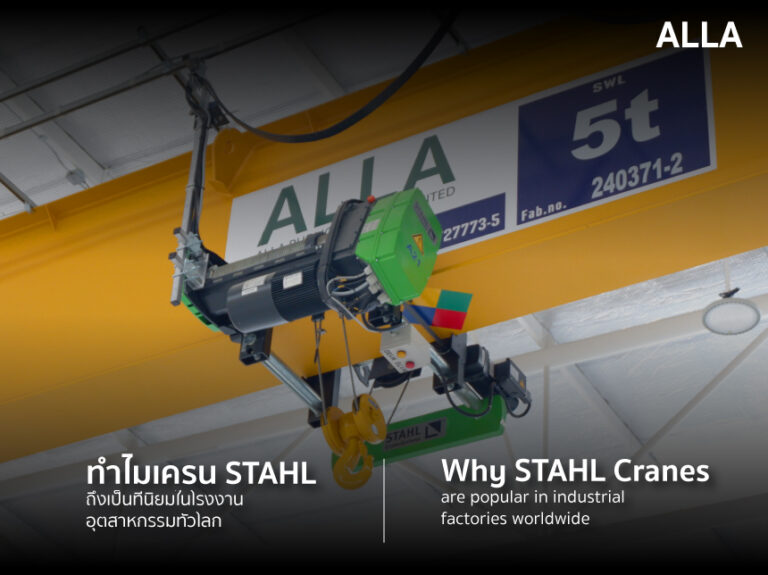
Industrial Cranes: Types, the Three-Axis Working Principle and a Three-Step Selection Guide
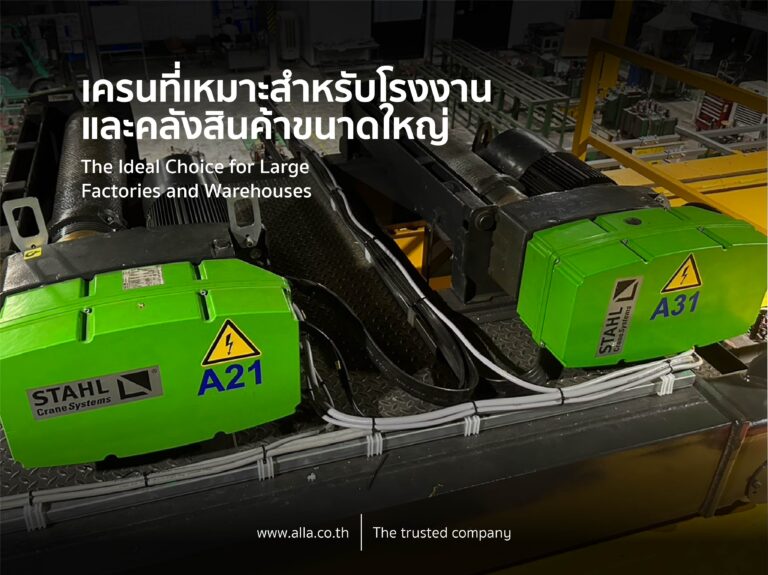
An industrial crane is a machine that lifts (hoists) and moves (traverses/travels) heavy objects beyond the capability of people or forklifts, especially in limited spaces, with a focus on safety and time efficiency. The right crane keeps factory workflow smooth and cuts production cost.
The three-axis principle
| Axis | Movement | Mechanism |
|---|---|---|
| Vertical | Up and down | Hoist |
| Transverse | Left and right along the beam | Trolley |
| Longitudinal | Along the runway | Bridge travel |
Popular crane types
| Type | Characteristics | Best for |
|---|---|---|
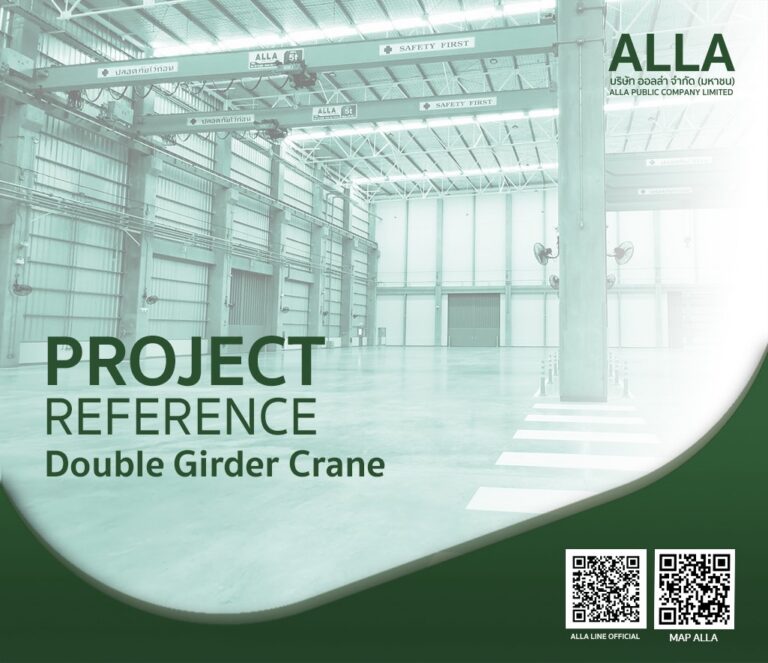
| Overhead crane | Runs on rails fixed to the building | Indoor work, free floor space |
| Gantry crane | Own legs, runs on ground rails | Outdoor work or buildings without overhead support |
| Jib crane | Arm for localised lifting | Workstations and machine feeding |
| Smart crane | Anti-sway and tablet control | Precision-focused applications |
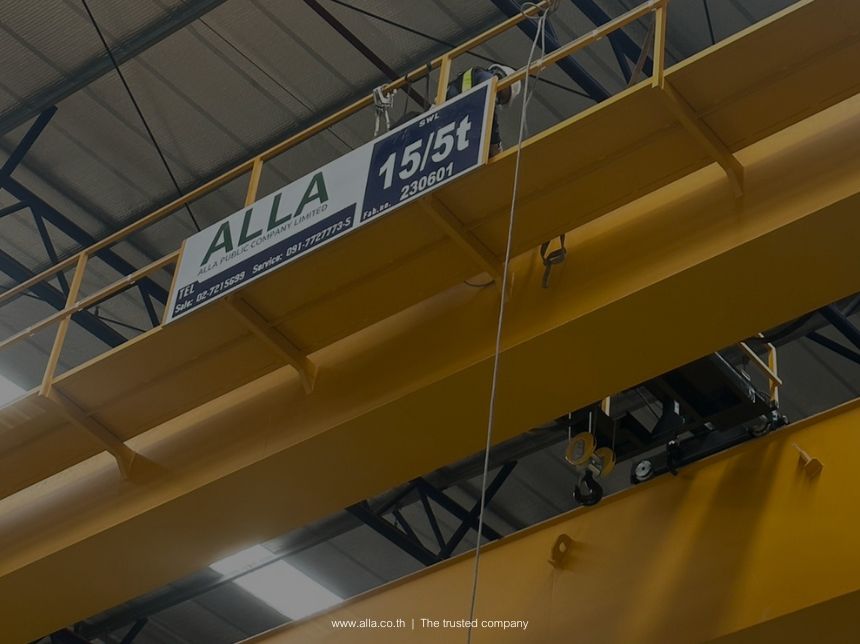
Three steps to choose
- Capacity: know the maximum load and add about a 20% margin
- Space: measure span and maximum lifting height
- Duty class: occasional use and 24-hour operation need very different specifications
Frequently Asked Questions
What is the difference between overhead and gantry cranes?
Overhead cranes run on rails attached to the building; gantry cranes have their own legs on ground rails.
How much capacity margin should I allow?
About 20% above the maximum load.
Read crane vs hoist and single vs double girder, or talk to ALLA about cranes.