
What Is the Difference Between a Crane and a Hoist?
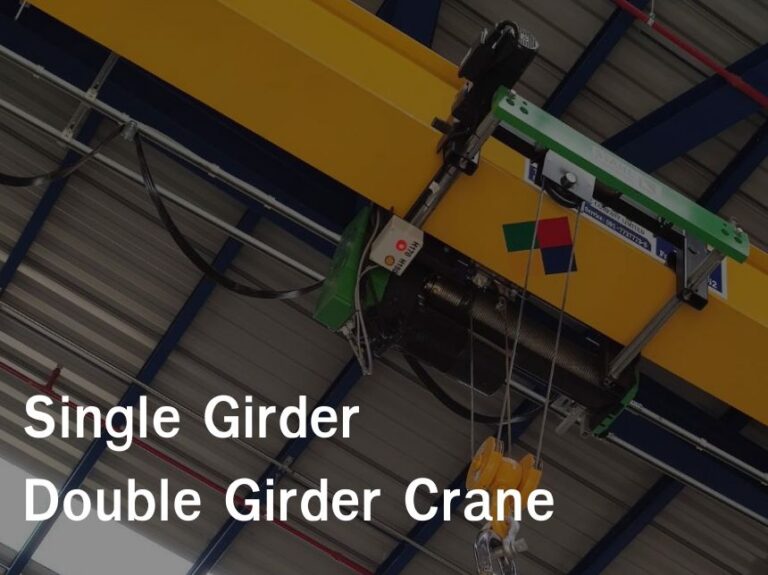
Short answer: a hoist is the lifting mechanism that raises and lowers loads vertically. A crane is a complete system of girder, runway rails, horizontal travel mechanism and a mounted hoist, so it lifts and moves loads horizontally. Hoist = lifts. Crane = lifts + moves.
Side-by-side
| Hoist | Crane | |
|---|---|---|
| Function | Vertical lifting | Lifting plus horizontal movement |
| Components | Motor, brake, wire rope or chain, control unit | Main girder, runway rails, travel mechanism, hoist |
| Horizontal movement | Not on its own | Yes |

Why the distinction matters in engineering
Crane design involves more than lifting capacity. Engineers also calculate:
- Impact forces
- Lateral forces
- Vibration
- Duty cycle and usage frequency
Confusing the terms can lead to equipment that does not match the job, raising safety risk and maintenance cost.
Frequently Asked Questions
Can a hoist be used instead of a crane?
Only for vertical lifting, and only when supported by a properly engineered structure.
Does every crane require a hoist?
Yes. The hoist performs the actual lifting.
Which one do I need?
If you only lift vertically, choose the right hoist. If you lift and move material horizontally, you need a complete crane system. See hoists and cranes.