How Regular Crane Inspections Reduce Workplace Accidents
Short answer: regular inspection and preventive maintenance reduce crane accidents by finding and fixing wear in critical components, such as wire ropes, hooks and brakes, before they fail, and by confirming that electrical safety systems like limit switches work. This protects people and assets, reduces unplanned downtime and keeps the plant compliant.
Three ways inspections reduce risk
1. Preventing mechanical failure
| Component | What is checked | Danger sign |
|---|---|---|
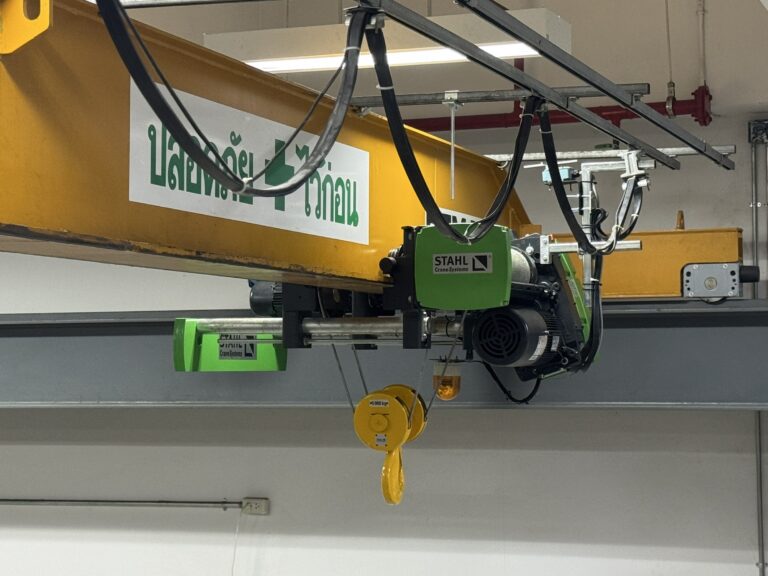
| Wire ropes and chains | Elongation, fractures, abnormal stranding | Warning before rope failure |
| Hooks | Throat opening, cracks in the shank | Small cracks can cause a hook to break |
| Brakes | Braking distance and lining grip | Load drift or failure to hold |
2. Keeping electrical safety systems working
- Limit switches prevent over-travel and collisions with the structure
- Overload limiters stop operation above the safe working load
3. Regulatory compliance
Thai regulations require factory cranes to be inspected and load-tested periodically for safety certification (form Por.Jor.1) by a certified mechanical engineer.
Stop the crane immediately if you notice
- Abnormal noise during travel
- Jerky hoist movement
- Brake slip (load drifting down after stopping)
- Oil leaking from the gearbox
Frequently Asked Questions
How often should factory cranes be inspected?
Certification is required at intervals set by law, from every 3 or 6 months to annually, depending on the work type and lifting capacity.
Besides safety, how do inspections help the business?
They reduce unplanned downtime and emergency repair costs.
See ALLA’s annual crane inspection service.